Projects
Airportfolio: 3D Interactive Flight Simulator Portfolio
Apr 2026 - Present
VisualWegovy: AR Appetite Suppression via Blue Color Filter
Mar 2026 – Present
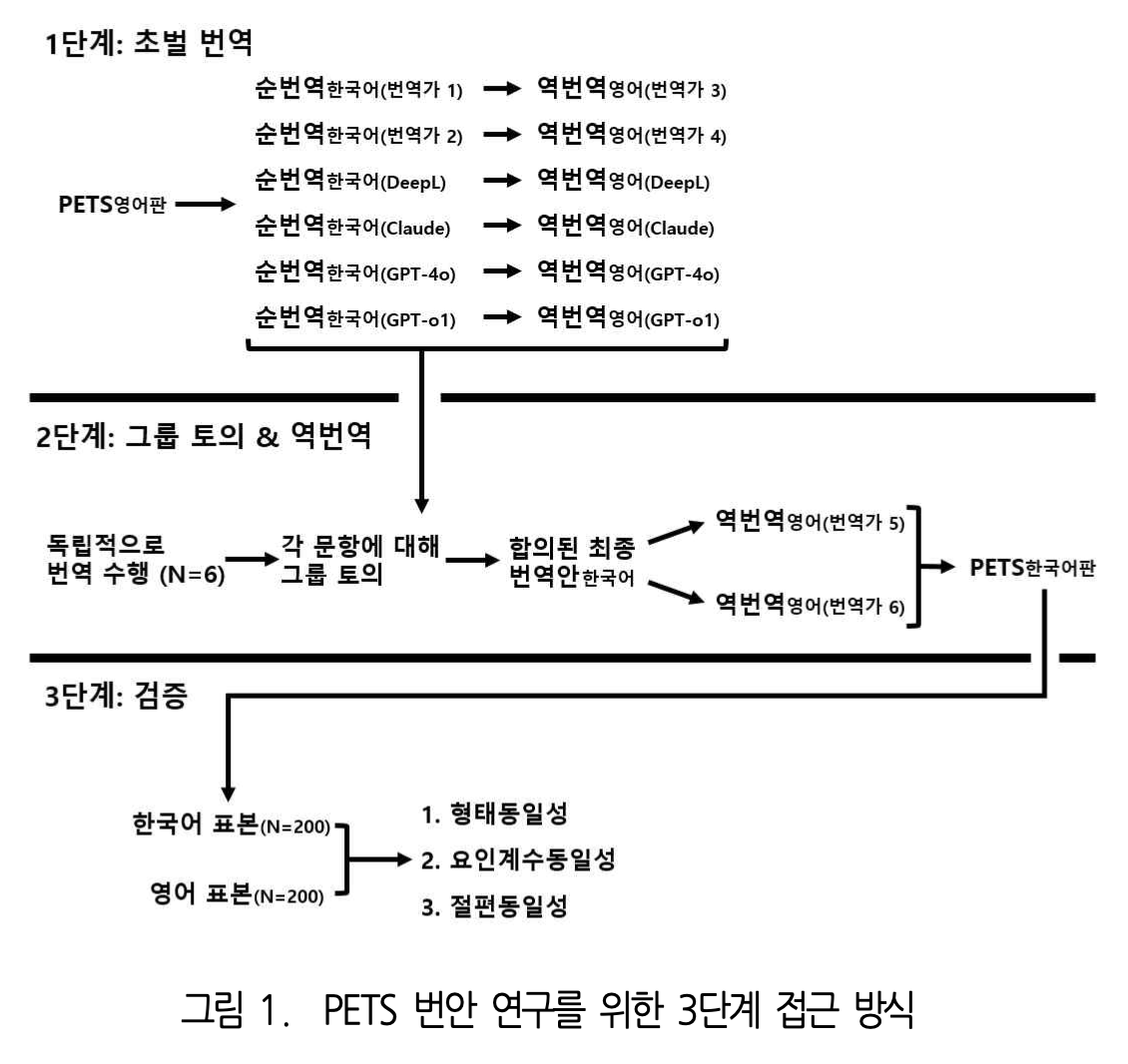
Korean Validation of Perceived Empathy of Technology Scale (PETS)
Mar 2025 – Present
MyLova: AI Feedback Timing Research
Aug 2024 – Present
SPEAR: Sorting-based Permuted Embedding Architecture for Recognition
Feb – Apr 2026
Mimicall: AI Character Video Call for Children with Speech Delays
Sep – Dec 2025
C-AIR: Web-Based Airline Reservation System
Mar – Jun 2025
Dynamic Weekly Planner: AI-Powered Personal Productivity Platform
Sep – Dec 2024
2024 WellcomLab Logo Design
Sep – Oct 2024
Buddy Virty: AI-Powered Interactive Reading Companion for Children
Mar – Jun 2024
MyListener: Context-Aware AI Journaling for Mental Wellness
Jan – Jun 2024
ARGOS Website Renewal Project
Jan – Feb 2024
Apr 2026 - Present
Airportfolio: 3D Interactive Flight Simulator Portfolio
Three.js-based 3D portfolio where you pilot an airplane through POI markers — autopilot tour and day/sunset/night themes.
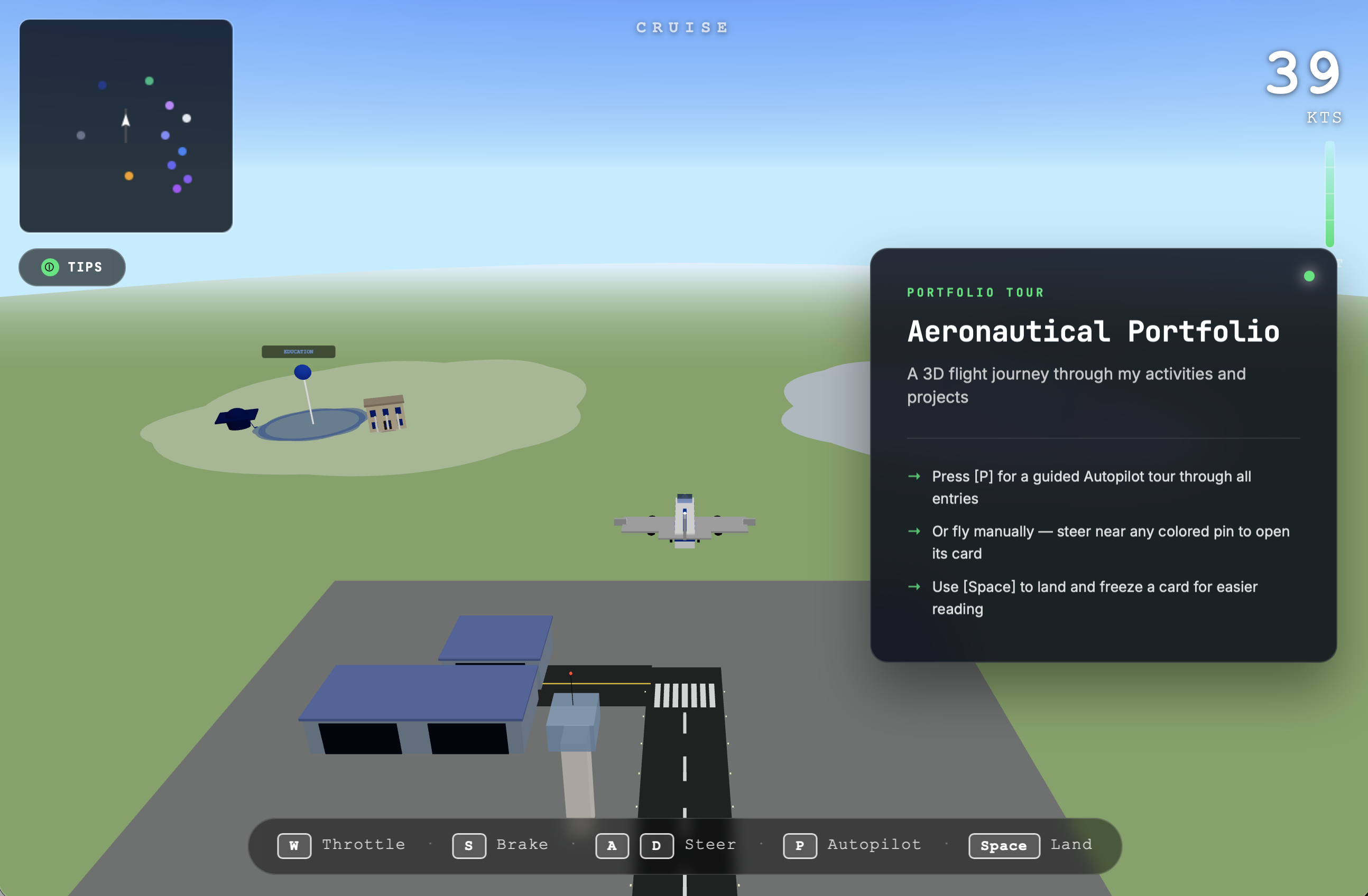
Airportfolio is a 3D interactive portfolio built with Three.js. Instead of scrolling a page, visitors fly an airplane through an airport world and land near colored pins to open portfolio cards.
Features
Manual flight (WASD) or one-key Autopilot mode that tours all entries in sequence. The minimap shows POI positions and the airplane cursor in real time.
World Design
A torus-wrapped 1000 × 1000 unit map with five thematic districts (Education, Research, Projects, Awards, Skills). Fog, sky shader, and lighting all change with the selected theme. Mobile visitors get an automatic autopilot tour.
Technical Details
Sky shader. Sky sphere is rendered with a custom GLSL fragment shader blending three color stops (top / mid / bottom) via power-curve interpolation — no texture, fully procedural. The sphere follows the camera so it's never clipped by the far plane.
Torus world wrap. The map is a 1000 × 1000 unit torus — the airplane teleports seamlessly at ±500 on both axes. Wrapped shortest-path distance is used for POI proximity and minimap rendering so pins never "jump" across seams.
Flight model. Custom multi-phase physics: ground roll → rotation → climb → cruise → landing. Each phase has independent acceleration, drag, and bank-angle curves.
Autopilot. Proportional heading controller that steers toward sequential waypoints, with speed modulated by distance to the target pin — slowing to 35 % throttle inside 25 units so the POI card has time to be read.
Time-aware themes. The world's lighting — sky color, fog density, and ambient glow — shifts automatically based on the visitor's local clock: daytime (6 am–5 pm), sunset (5–8 pm), or night (8 pm–6 am). Pressing T cycles through all three.
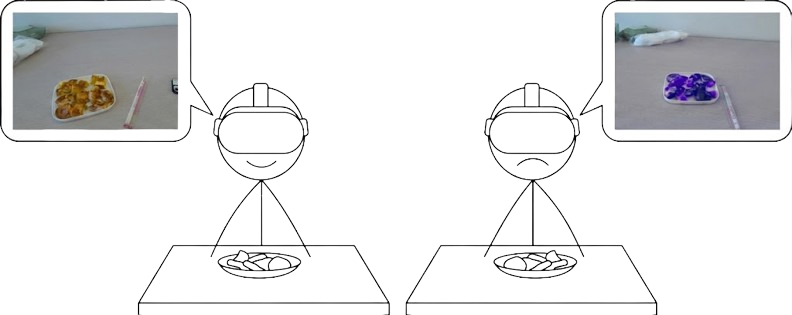
VisualWegovy is an AR/MR system for Meta Quest 3 that spatially overlays a blue LUT color filter onto food during a meal. Blue is nearly absent in naturally edible foods and is known to suppress appetite through the color–food association mechanism — making it a viable non-pharmacological HCI intervention.
How It Works
Two stacked OVRPassthroughLayer components render the real-world background in full color while projecting a blue LUT filter exclusively onto a Quad mesh positioned above the food. Only the food region is tinted; the surrounding environment stays in natural color.
Pilot Study (n=4, May 2026)
Between-subject design: Blue filter ON (n=2) vs. control (n=2). Appetite measured via VAS (0–100 mm) at T0 (baseline) and T1 (immediately after headset-on).
RQ1 — Appetite Suppression
Blue condition averaged −9 pt VAS change (P2: −7, P3: −11) vs. +7.5 pt in control (P1: +15, P4: 0) — directionally consistent with the hypothesis.
RQ2 — Taste Evaluation
Taste suppression was unclear at pilot scale. Likert scores were nearly identical across conditions (Blue 3.0 vs. None 3.5 / 5).
Supplementary — Eating Behavior
Blue participants consumed less food (avg 41 g vs. 61.5 g) and ate more slowly (avg 20.5 vs. 25.2 g/min).
Qualitative Findings
All 4 participants spontaneously described the color–appetite suppression link in retrospective Think-Aloud interviews, consistent with Spence (2015).
Mar 2025 – Present
Korean Validation of Perceived Empathy of Technology Scale (PETS)
Korean validation of the PETS scale in collaboration with LMU Munich. Large-scale study (N=400) via Embrain. Submitted to the Korean HCI Journal (under review).
Collaborated with LMU Munich researchers to validate the Korean version of the PETS scale.
Prepared survey materials and video stimuli for a large-scale study (N=400) via Embrain.
Submitted to the Korean HCI Journal — currently under review.
Aug 2024 – Present
MyLova: AI Feedback Timing Research
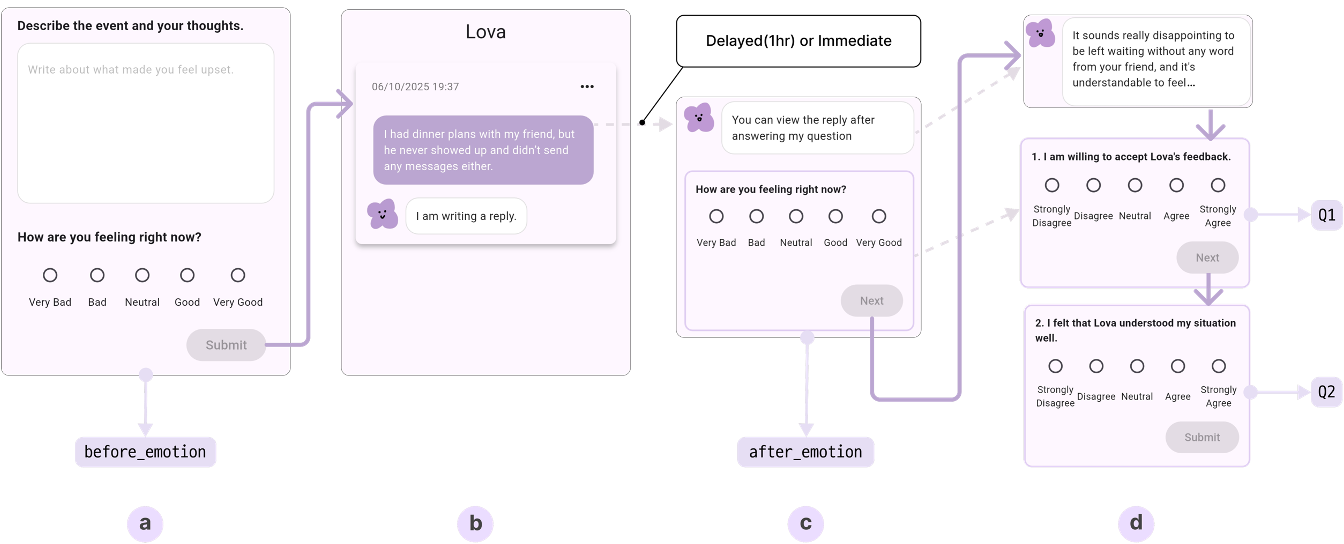
HCI study on how AI feedback timing affects emotional support in journaling. 4-week field study (N=24).
Designed and led an HCI study investigating how AI feedback timing affects emotional support in journaling.
Built the Flutter/GPT-4o app from scratch and conducted a 4-week field study (N=24) comparing immediate vs. delayed feedback conditions.
First-authored two manuscripts submitted to ACM CHI '26 (full paper & Late-Breaking Work).
Feb – Apr 2026
SPEAR: Sorting-based Permuted Embedding Architecture for Recognition
Lightweight ViT module that learns task-optimal patch orderings via differentiable sorting, without RL. Accepted to KCC 2026.
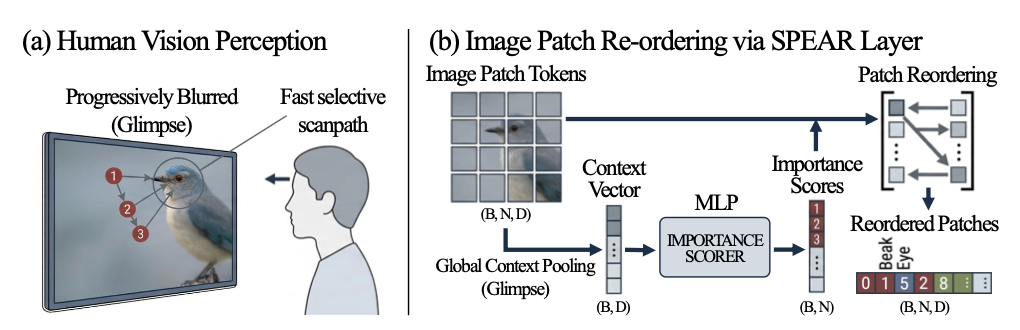
Proposed SPEAR, a plug-in module inserted between the patch embedding and encoder of a frozen pre-trained ViT. Inspired by human visual attention — where a global glimpse precedes detailed examination — SPEAR pools patch representations into a context vector, scores each patch's importance via a lightweight MLP, then reorders patches using Straight-Through Estimation (STE) for end-to-end differentiable training with a standard cross-entropy loss.
Unlike prior patch-reordering methods that rely on reinforcement learning (e.g., REINFORCE), SPEAR requires no additional loss functions or RL machinery, and trains with frozen backbone weights — updating only its own scorer parameters.
Results: +1.34pp Top-1 on ImageNet-1K and +1.93pp on CIFAR-10 over frozen ViT-Base baselines, demonstrating that complete ViT architectures are order-sensitive in practice despite attention's theoretical permutation-invariance.
Behind the name. The name draws inspiration from the Sphere in Las Vegas, where this project was developed during a research stay at UNLV.
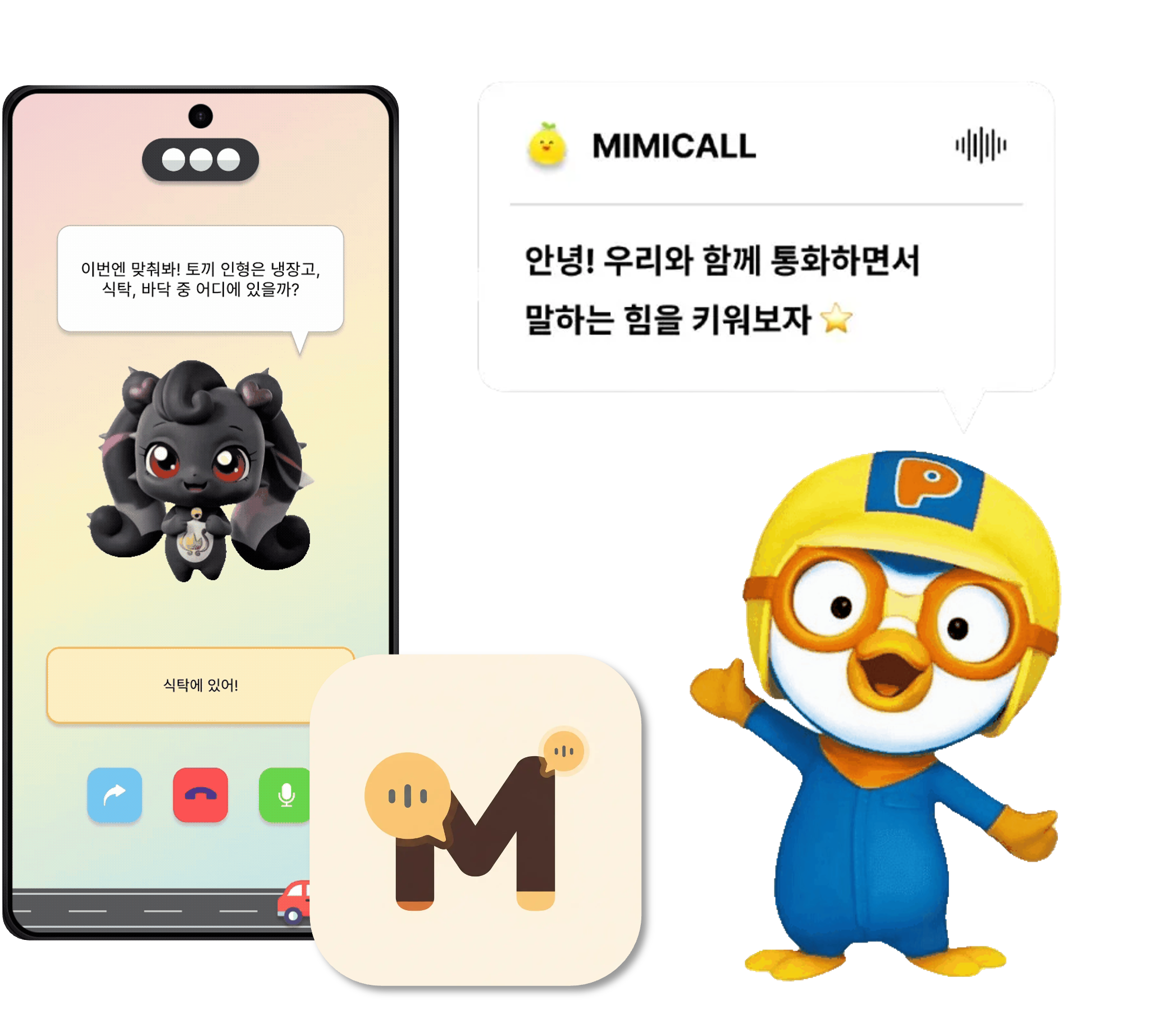
Mimicall is an AI-assisted language therapy app that helps children with speech delays practice speaking through real-time video calls with animated characters. Parents configure target utterances and situations; the AI generates interactive conversations and session reports.
Session Setup
Parents set the target utterance and situation before each session. The AI tailors the call script to guide the child toward producing that specific utterance.
Live AI Call
The AI character uses the Milieu Teaching technique — prompting, delaying, then reinforcing the child's utterance. Real-time color-coded guidelines coach parents on when to intervene.
Session Report
After each call, a report is generated with utterance count, duration, and an AI-written conversation summary. Paper accepted to KCC 2026.
Mar – Jun 2025
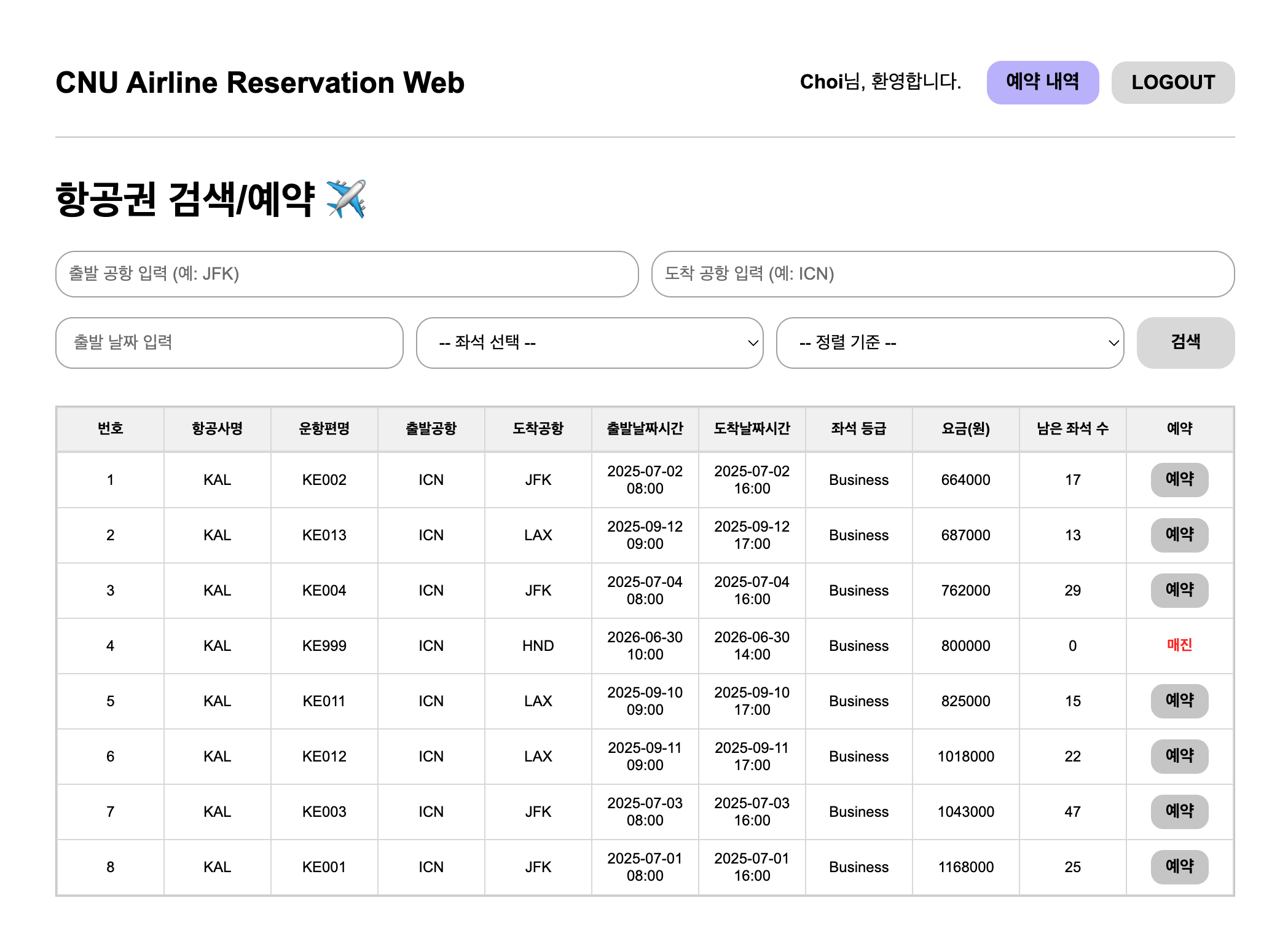
C-AIR: Web-Based Airline Reservation System
Flask + Oracle DB airline reservation system with flight search, booking/cancellation, email confirmation, and admin analytics.
C-AIR is a full-stack airline reservation web app built with Flask and Oracle DB. Supports flight search, seat-class booking, cancellation with tiered fees, and an admin statistics dashboard.
Database
Designed a 5-table schema (AIRPLANE, SEATS, CUSTOMER, RESERVE, CANCEL) with composite primary keys and UUID-based reservation IDs to support repeated reserve/cancel cycles on the same flight.
Features
Flight search with filters (airport, date, seat class, sort). Booking triggers a Gmail SMTP confirmation email. Cancellation fees are calculated automatically by days remaining until departure (₩150,000 → ₩180,000 → ₩250,000 → full price). Admin view exposes per-customer cancellation rates and payment rankings via RANK() window function.
Sep – Dec 2024
Dynamic Weekly Planner: AI-Powered Personal Productivity Platform
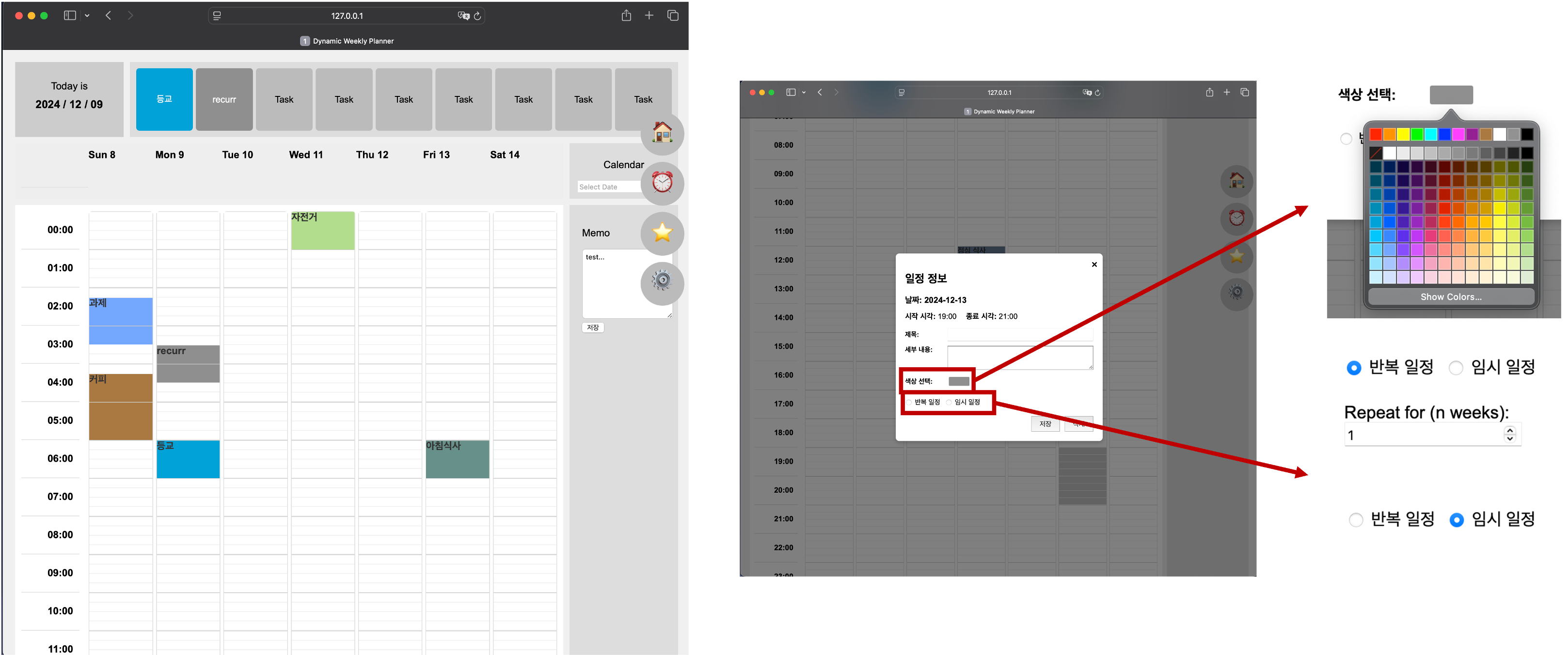
Web productivity platform with TensorFlow.js presence-detection focus tracker and GPT-4 scheduling assistant.
Built a web productivity platform with a TensorFlow.js presence-detection focus tracker and a GPT-4 scheduling assistant.
Features drag-and-drop scheduling backed by Firebase Realtime Database.
Sep – Oct 2024
2024 WellcomLab Logo Design
Visual identity for Wellness Computing Lab — W/M initials encoded as a heartbeat pulse.
Designed the lab's visual identity, encoding the W/M initials as a heartbeat pulse to represent the convergence of Wellness and Computing.
Delivered assets optimized for light, dark, and web interfaces. The current logo was developed from this design — the latest version can be seen here.
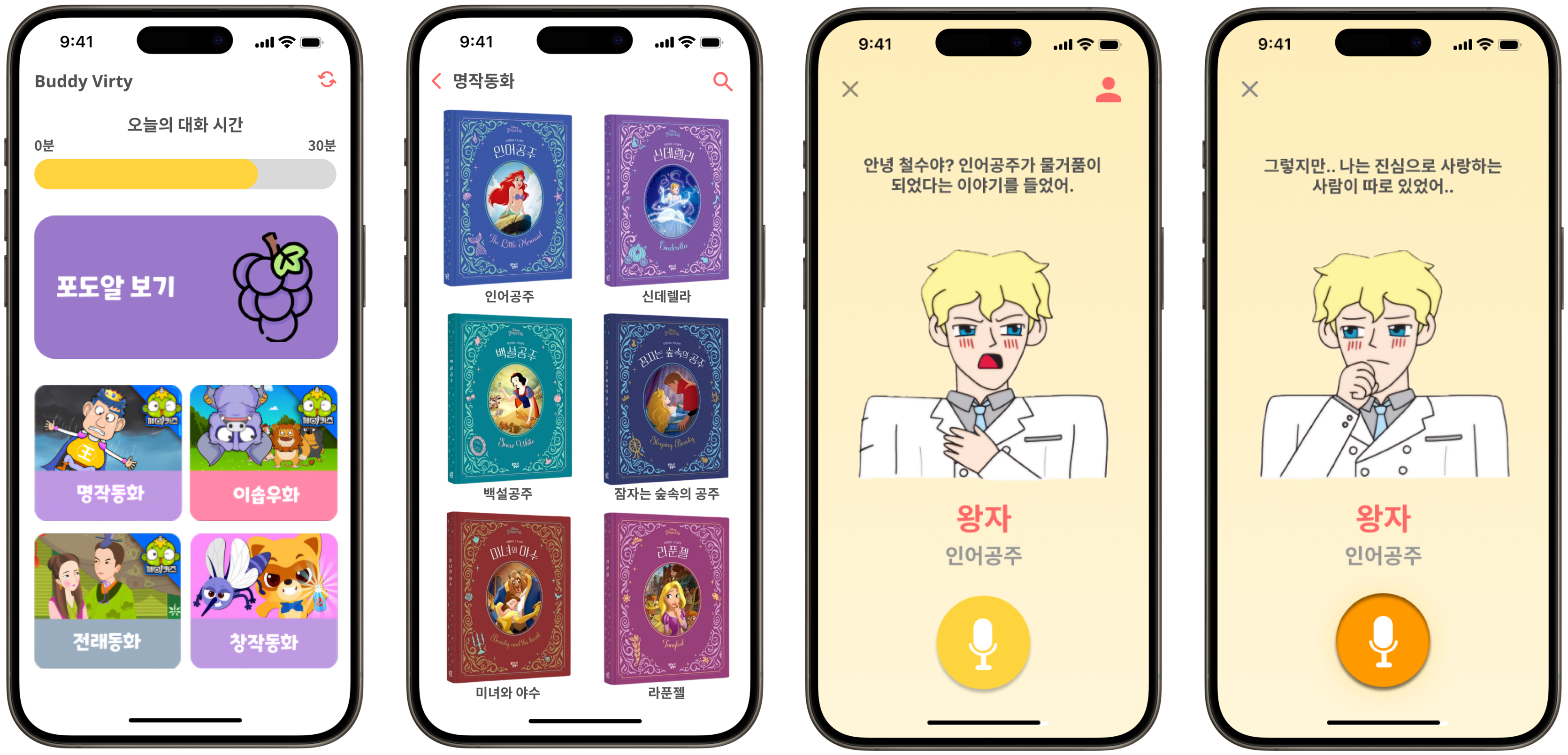
Voice-based fairy tale app for children aged 6–10. After selecting a book they've read, children converse directly with an AI-powered character from the story — building critical thinking, empathy, and reading habits through interactive dialogue rather than passive consumption.
Engineered an STT → ChatGPT → TTS pipeline with prompt engineering tailored to the child's age and chosen character. The AI proactively asks questions to draw out moral reasoning, not just answer. Characters display contextual animations and expressions for a lifelike feel.
Includes a Grape Stamps reward system — completing daily conversation goals earns stamps, and collecting 30 unlocks a character selection pass. A password-protected Parent Mode lets parents set goals, monitor history, and read full conversation transcripts.
Jan – Jun 2024
MyListener: Context-Aware AI Journaling for Mental Wellness
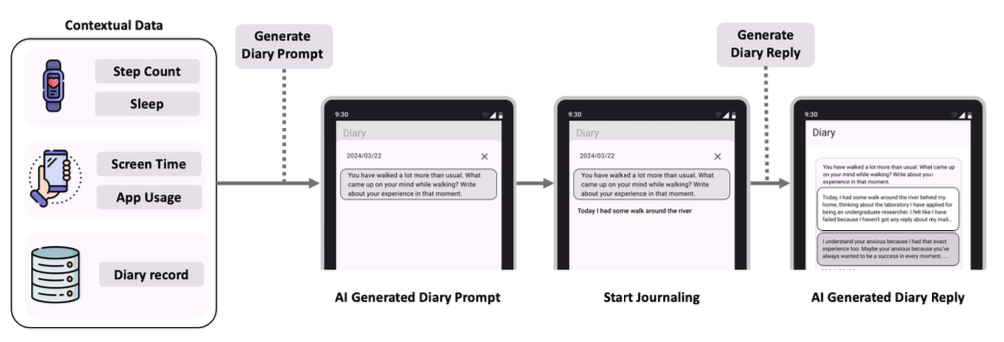
Context-aware AI journaling app for alleviating depression and loneliness. Published at ACM UbiComp Companion '24.
As second author, conducted user interviews and derived design implications on human-AI intimacy for a context-aware journaling app.
Published at ACM UbiComp Companion '24.
Jan – Feb 2024
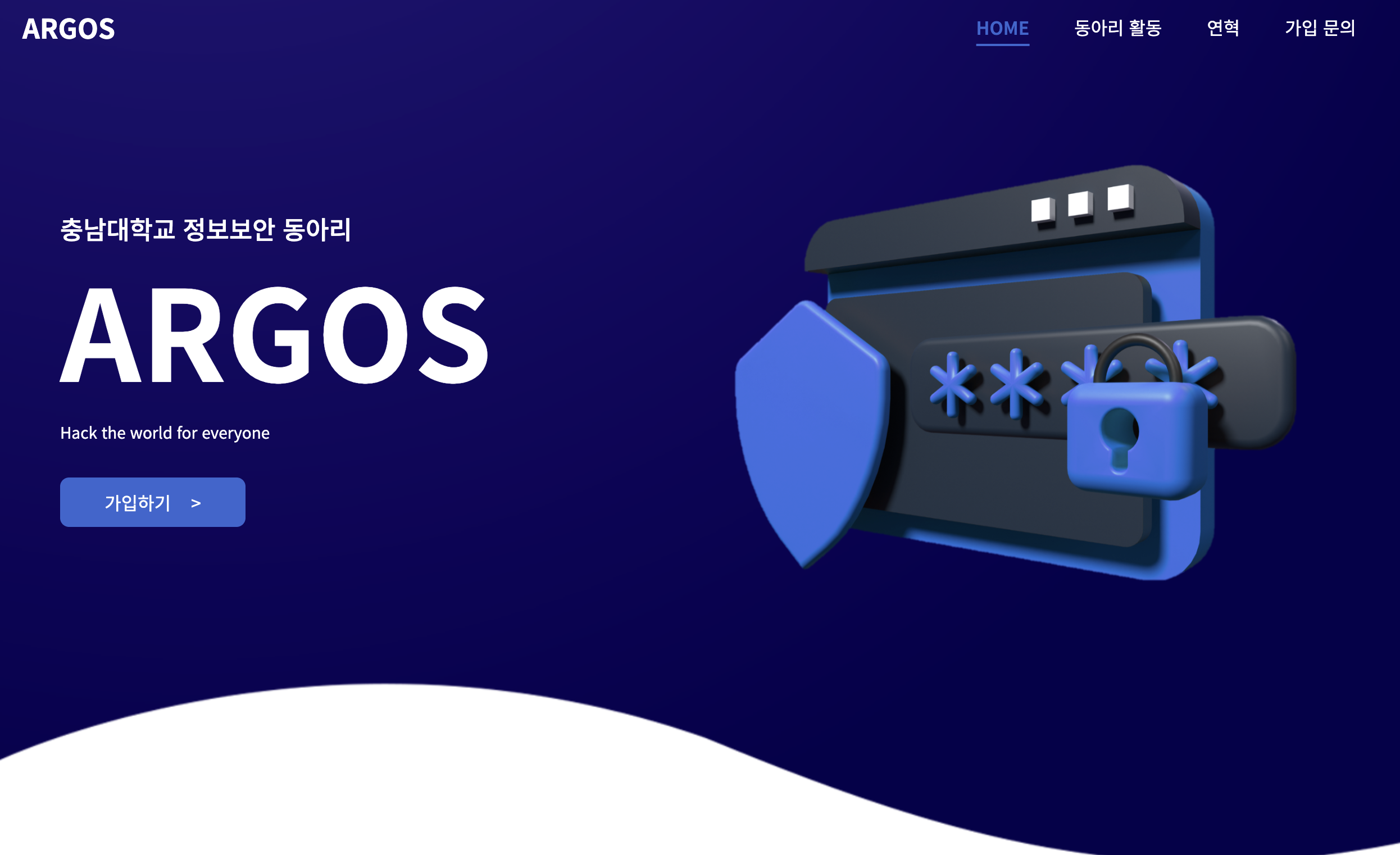
ARGOS Website Renewal Project
Redesigned the ARGOS security club website — DB schema design and Hacking Demonstration archive frontend.
Designed the database schema for the bulletin board system and built the frontend for the Hacking Demonstration archive page.